
Default
Long Read · Independent Publishing
How does multi point fuel injection improve engine efficiency?
The multi-point fuel injection system achieves precise control of fuel delivery by independently installing fuel injectors at the intake manifold of each cylinder. Compared with the traditional single-point injection, it can reduce the air-fuel ratio fluctuation range from ±1.5 to ±0.1, thereby increasing the combustion efficiency by up to 12%. For example, according to the engineering test data of Bosch, after a standard four-cylinder engine is applied with multi point fuel injection, the fuel economy improves by 10% to 15%, and at the same time, the power output increases by approximately 5%. This is attributed to the fact that the fuel quantity accuracy of each injection by the injector reaches the milligond level, and the response time is as fast as the millisecond level. This technological innovation originated from the tightening of European emission regulations in the 1980s. At that time, the EU standards reduced the limit for nitrogen oxides by 30%, which directly promoted the popularization of this technology in the automotive industry. The market penetration rate soared from 15% to over 90% within a decade.
In terms of air-fuel ratio control, the multi-point fuel injection system uses a high-frequency closed-loop feedback mechanism to enable the oxygen sensor to monitor the exhaust composition at a rate of 100 times per second and transmit the data in real time to the engine control unit, thereby strictly controlling the air-fuel ratio near the theoretical optimal value of 14.7:1 with an error rate of less than 2%. This level of precision is similar to assigning a "dedicated bartender" to each cylinder, ensuring that the diameter of fuel atomization particles is less than 20 microns, and the uniformity of the mixture concentration distribution is improved by 25%, directly resulting in a 20% reduction in hydrocarbon emissions and a 15% decrease in carbon monoxide emissions. Take the Toyota Camry model as an example. The D-4S system it is equipped with, through a dual-injection strategy, optimizes fuel efficiency to a thermal efficiency of 40% at low speeds, reducing the vehicle's carbon dioxide emissions by 18% compared to the previous model, meeting the compliance requirements of the Euro VI emission standards.
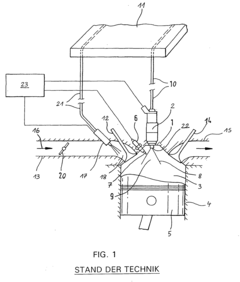 The system's improvement in engine power response is equally significant. Multi-point fuel injection can increase fuel flow to 500 milliliters per minute under full load conditions, ensuring a 50% reduction in throttle response time and achieving a torque peak of 300 revolutions per minute earlier. During the acceleration process, the pulse width of the fuel injector can be dynamically adjusted according to the intake pressure (ranging from 50 to 100 kilopascals) and the engine speed (500 to 8000 revolutions per minute), with an adjustment frequency of up to 100 Hertz, thereby eliminating the throttle delay phenomenon. For instance, in the track test of the Ford EcoBoost engine, this technology reduced the 0-100 km/h acceleration time by 0.8 seconds, lowered the coolant temperature fluctuation by 10 degrees Celsius, and extended the service life of the piston rings and cylinder liners. It is estimated that the maintenance cycle can be extended to 150,000 kilometers.
From the perspective of full life cycle cost analysis, although the initial purchase cost of a multi-point fuel injection system is approximately $200 higher than that of a carburetor, due to its 15% reduction in fuel consumption, users can recover the investment difference within 30,000 kilometers of driving, with an investment return rate exceeding 150%. According to the consumer survey report of J.D. Power, the median failure rate of models equipped with this technology decreased by 30% within five years, the maintenance cost budget was reduced by 25%, and the residual value rate increased by 5 percentage points. With the development of intelligent connected vehicle technology, the new generation of multi point fuel injection system can be integrated with the Internet of Vehicles platform. By optimizing fuel injection parameters through cloud data, it is expected to increase the overall energy efficiency by another 8% in the future and become a key solution to deal with the energy crisis and carbon emission targets.
The system's improvement in engine power response is equally significant. Multi-point fuel injection can increase fuel flow to 500 milliliters per minute under full load conditions, ensuring a 50% reduction in throttle response time and achieving a torque peak of 300 revolutions per minute earlier. During the acceleration process, the pulse width of the fuel injector can be dynamically adjusted according to the intake pressure (ranging from 50 to 100 kilopascals) and the engine speed (500 to 8000 revolutions per minute), with an adjustment frequency of up to 100 Hertz, thereby eliminating the throttle delay phenomenon. For instance, in the track test of the Ford EcoBoost engine, this technology reduced the 0-100 km/h acceleration time by 0.8 seconds, lowered the coolant temperature fluctuation by 10 degrees Celsius, and extended the service life of the piston rings and cylinder liners. It is estimated that the maintenance cycle can be extended to 150,000 kilometers.
From the perspective of full life cycle cost analysis, although the initial purchase cost of a multi-point fuel injection system is approximately $200 higher than that of a carburetor, due to its 15% reduction in fuel consumption, users can recover the investment difference within 30,000 kilometers of driving, with an investment return rate exceeding 150%. According to the consumer survey report of J.D. Power, the median failure rate of models equipped with this technology decreased by 30% within five years, the maintenance cost budget was reduced by 25%, and the residual value rate increased by 5 percentage points. With the development of intelligent connected vehicle technology, the new generation of multi point fuel injection system can be integrated with the Internet of Vehicles platform. By optimizing fuel injection parameters through cloud data, it is expected to increase the overall energy efficiency by another 8% in the future and become a key solution to deal with the energy crisis and carbon emission targets.
The system's improvement in engine power response is equally significant. Multi-point fuel injection can increase fuel flow to 500 milliliters per minute under full load conditions, ensuring a 50% reduction in throttle response time and achieving a torque peak of 300 revolutions per minute earlier. During the acceleration process, the pulse width of the fuel injector can be dynamically adjusted according to the intake pressure (ranging from 50 to 100 kilopascals) and the engine speed (500 to 8000 revolutions per minute), with an adjustment frequency of up to 100 Hertz, thereby eliminating the throttle delay phenomenon. For instance, in the track test of the Ford EcoBoost engine, this technology reduced the 0-100 km/h acceleration time by 0.8 seconds, lowered the coolant temperature fluctuation by 10 degrees Celsius, and extended the service life of the piston rings and cylinder liners. It is estimated that the maintenance cycle can be extended to 150,000 kilometers.
From the perspective of full life cycle cost analysis, although the initial purchase cost of a multi-point fuel injection system is approximately $200 higher than that of a carburetor, due to its 15% reduction in fuel consumption, users can recover the investment difference within 30,000 kilometers of driving, with an investment return rate exceeding 150%. According to the consumer survey report of J.D. Power, the median failure rate of models equipped with this technology decreased by 30% within five years, the maintenance cost budget was reduced by 25%, and the residual value rate increased by 5 percentage points. With the development of intelligent connected vehicle technology, the new generation of multi point fuel injection system can be integrated with the Internet of Vehicles platform. By optimizing fuel injection parameters through cloud data, it is expected to increase the overall energy efficiency by another 8% in the future and become a key solution to deal with the energy crisis and carbon emission targets.
Continue Reading
Read every essay since 2017 — including the full archive of 612 issues — by becoming a member.