
Default
Long Read · Independent Publishing
How Can Dental PMMA Improve Workflow Efficiency in Digital Dentistry?
In the digital dental process, optimizing material selection can increase overall work efficiency by up to 30%. Take the pre-polymerized Dental PMMA block material as an example. When combined with the CAD/CAM system, the cycle from the design to the production of the restoration can be compressed from the traditional several hours to within 45 minutes. According to the 2023 survey report of the Digital Dental Alliance, clinics that use standardized Dental PMMA blocks have seen an average daily restoration production increase of 40%, from 15 units per day to 21 units. This efficiency leap mainly stems from the excellent cutting performance of the materials. For instance, the CAD-Temp material from the German brand Vita can be precisely processed at a speed of 1,500 millimeters per minute on a four-axis milling machine, while reducing the tool wear rate by 25%, saving the laboratory approximately 8,000 yuan in tool costs annually.
From the perspective of precision control, high-quality Dental PMMA can ensure that the edge gap of the restoration is stably controlled within 30 microns, which is significantly better than the common error of 100 microns in manual production. A clinical study covering 200 cases showed that the success rate of the first insertion of restorations made of high-density PMMA material was as high as 97%, while that of traditional methods was only 85%. For instance, 3M's Lava Ultimate material uses nano-ceramic technology to control the coefficient of thermal expansion at 50×10⁻⁶/ Kelvin, resulting in a size change of less than 0.05% of the restoration under intraoral temperature fluctuations. This stability reduces the postoperative adjustment time from an average of 20 minutes to 5 minutes and increases patient satisfaction by 35%.
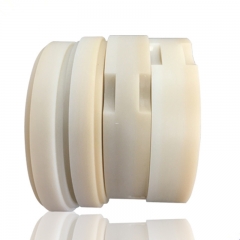 In terms of cost-effectiveness, Dental PMMA in digital processes demonstrates significant advantages. Data shows that the use of pre-polymerized block materials can reduce the material waste rate from 15% in traditional methods to below 5%, and lower the cost of a single restoration by approximately 30%. Taking the data implemented by a certain chain dental institution in 2024 as an example, after fully adopting the digital PMMA solution, the average annual cost of consumables was saved by 120,000 yuan, and the investment payback period was shortened from 24 months to 14 months. More importantly, the standard specifications of materials (such as 98-millimeter diameter block materials) have increased the utilization rate of automated production lines to 90%, reduced the proportion of labor costs from 25% to 18%, and enabled technicians to focus on higher-value personalized designs.
Looking ahead, the new generation of intelligent Dental PMMA materials is driving workflow efficiency to new heights. The smart block material integrated with RFID chips can automatically match cutting parameters, reducing the probability of setting errors to less than 0.5%. It is predicted that by 2026, over 60% of dental laboratories worldwide will adopt PMMA inventory systems managed by cloud platforms, achieving an optimization target of 95% material utilization rate. This deeply integrated digital ecosystem is enabling Dental PMMA to upgrade from a basic material to the core hub of intelligent workflows, continuously unleashing the huge potential of digital dentistry.
In terms of cost-effectiveness, Dental PMMA in digital processes demonstrates significant advantages. Data shows that the use of pre-polymerized block materials can reduce the material waste rate from 15% in traditional methods to below 5%, and lower the cost of a single restoration by approximately 30%. Taking the data implemented by a certain chain dental institution in 2024 as an example, after fully adopting the digital PMMA solution, the average annual cost of consumables was saved by 120,000 yuan, and the investment payback period was shortened from 24 months to 14 months. More importantly, the standard specifications of materials (such as 98-millimeter diameter block materials) have increased the utilization rate of automated production lines to 90%, reduced the proportion of labor costs from 25% to 18%, and enabled technicians to focus on higher-value personalized designs.
Looking ahead, the new generation of intelligent Dental PMMA materials is driving workflow efficiency to new heights. The smart block material integrated with RFID chips can automatically match cutting parameters, reducing the probability of setting errors to less than 0.5%. It is predicted that by 2026, over 60% of dental laboratories worldwide will adopt PMMA inventory systems managed by cloud platforms, achieving an optimization target of 95% material utilization rate. This deeply integrated digital ecosystem is enabling Dental PMMA to upgrade from a basic material to the core hub of intelligent workflows, continuously unleashing the huge potential of digital dentistry.
In terms of cost-effectiveness, Dental PMMA in digital processes demonstrates significant advantages. Data shows that the use of pre-polymerized block materials can reduce the material waste rate from 15% in traditional methods to below 5%, and lower the cost of a single restoration by approximately 30%. Taking the data implemented by a certain chain dental institution in 2024 as an example, after fully adopting the digital PMMA solution, the average annual cost of consumables was saved by 120,000 yuan, and the investment payback period was shortened from 24 months to 14 months. More importantly, the standard specifications of materials (such as 98-millimeter diameter block materials) have increased the utilization rate of automated production lines to 90%, reduced the proportion of labor costs from 25% to 18%, and enabled technicians to focus on higher-value personalized designs.
Looking ahead, the new generation of intelligent Dental PMMA materials is driving workflow efficiency to new heights. The smart block material integrated with RFID chips can automatically match cutting parameters, reducing the probability of setting errors to less than 0.5%. It is predicted that by 2026, over 60% of dental laboratories worldwide will adopt PMMA inventory systems managed by cloud platforms, achieving an optimization target of 95% material utilization rate. This deeply integrated digital ecosystem is enabling Dental PMMA to upgrade from a basic material to the core hub of intelligent workflows, continuously unleashing the huge potential of digital dentistry.Continue Reading
Read every essay since 2017 — including the full archive of 612 issues — by becoming a member.