
Default
Long Read · Independent Publishing
Can printed shopping bags significantly boost event or trade show impact?
At a bustling exhibition site, a carefully designed printed shopping bag is not merely a container; it is a mobile billboard that can generate over 3,000 brand exposures on average each day. According to a study by Event Marketer magazine, the brand recall of high-quality custom shopping bags distributed at the exhibition was 50% higher than that of exhibitors who did not use branded packaging. These shopping bags, as physical media, typically have an advertising life cycle of more than six months. As users carry them repeatedly, the cost of a single brand impression can be as low as 0.01 US dollars, which is far lower than the average cost of 0.5 US dollars per click for digital advertising. The return on investment can increase by up to 300%.
From the perspective of quantitative analysis of marketing performance, printed shopping bags are an effective strategy to reduce customer acquisition costs. At an industry exhibition with 20,000 participants, if 5,000 well-designed shopping bags are distributed and it is assumed that 60% of the recipients will continue to use them both inside and outside the exhibition venue, this means that the brand logo will remain in the areas with the highest foot traffic density throughout the 72-hour exhibition period. Data shows that a shopping bag taken away from the venue can generate an average of 25 additional passive exposures. This strategy expands the traditional one-way booth interaction into a dynamic and distributed exposure network, which can increase the inquiry volume of potential customers by approximately 15% to 30%.
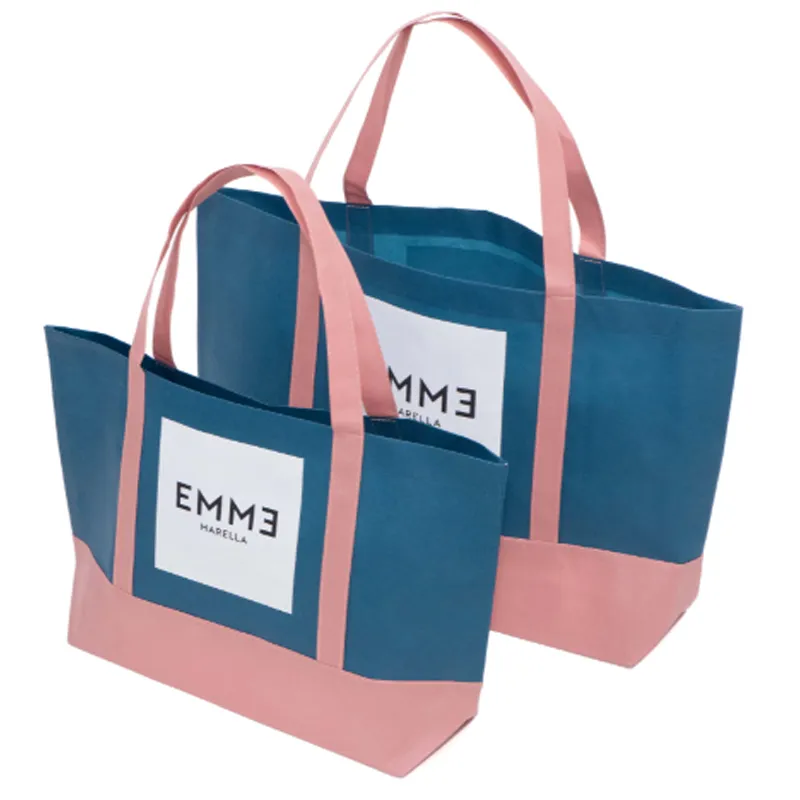 Design parameters and material selection directly affect the communication efficiency. A printing scheme that adopts high-saturation colors (such as spot colors on Pantone color cards) can increase the visual recognition distance of brand logos by 40%. A consumer behavior analysis shows that shopping bags made of laminated or thickened cotton materials are reused more than five times as frequently as ordinary paper bags, which is equivalent to extending the advertising period from a few days to several months. For instance, at CES (Consumer Electronics Show), a certain technology company distributed eco-friendly canvas shopping bags with a load capacity of up to 8 kilograms. A post-event survey revealed that 18% of the respondents first noticed the brand by seeing the bags carried by others, which directly contributed 7% to its new customer growth rate.
Sustainability has become a key dimension for measuring brand value. Printed shopping bags made of eco-friendly materials can significantly enhance brand image and public favorability. shopping bags that use recycled materials with a content of over 80% can not only reduce carbon footprints by approximately 65%, but also win the favor of young consumers. A 2023 global market trend report indicates that 68% of Gen Z consumers are more willing to support brands that demonstrate environmental responsibility in their activities. When brands materialize this sense of responsibility through touchable and portable shopping bags, the average brand trust score they convey increases by 20 percentage points, which can be transformed into immeasurable word-of-mouth traffic in the era of social media.
Ultimately, the assessment of the impact of printed shopping bags should be incorporated into a long-term brand equity growth model. A successful exhibition marketing campaign aims not only at immediate sales leads but also at the long-term accumulation of brand assets. A shopping bag that is retained and reused is far more effective than a one-time advertisement. Data shows that the enhanced brand awareness brought about by high-quality gift bags can still maintain a 35% retention effect within six months after the event ends, and its positive impact on the customer lifetime value should not be underestimated. Therefore, it is a consensus among smart marketers to view printed shopping bags as a strategic brand investment rather than merely an exhibition operation expense. With its unique physical properties and social currency characteristics, it continuously creates an influence for brands that goes beyond the boundaries of exhibition booths.
Design parameters and material selection directly affect the communication efficiency. A printing scheme that adopts high-saturation colors (such as spot colors on Pantone color cards) can increase the visual recognition distance of brand logos by 40%. A consumer behavior analysis shows that shopping bags made of laminated or thickened cotton materials are reused more than five times as frequently as ordinary paper bags, which is equivalent to extending the advertising period from a few days to several months. For instance, at CES (Consumer Electronics Show), a certain technology company distributed eco-friendly canvas shopping bags with a load capacity of up to 8 kilograms. A post-event survey revealed that 18% of the respondents first noticed the brand by seeing the bags carried by others, which directly contributed 7% to its new customer growth rate.
Sustainability has become a key dimension for measuring brand value. Printed shopping bags made of eco-friendly materials can significantly enhance brand image and public favorability. shopping bags that use recycled materials with a content of over 80% can not only reduce carbon footprints by approximately 65%, but also win the favor of young consumers. A 2023 global market trend report indicates that 68% of Gen Z consumers are more willing to support brands that demonstrate environmental responsibility in their activities. When brands materialize this sense of responsibility through touchable and portable shopping bags, the average brand trust score they convey increases by 20 percentage points, which can be transformed into immeasurable word-of-mouth traffic in the era of social media.
Ultimately, the assessment of the impact of printed shopping bags should be incorporated into a long-term brand equity growth model. A successful exhibition marketing campaign aims not only at immediate sales leads but also at the long-term accumulation of brand assets. A shopping bag that is retained and reused is far more effective than a one-time advertisement. Data shows that the enhanced brand awareness brought about by high-quality gift bags can still maintain a 35% retention effect within six months after the event ends, and its positive impact on the customer lifetime value should not be underestimated. Therefore, it is a consensus among smart marketers to view printed shopping bags as a strategic brand investment rather than merely an exhibition operation expense. With its unique physical properties and social currency characteristics, it continuously creates an influence for brands that goes beyond the boundaries of exhibition booths.
Design parameters and material selection directly affect the communication efficiency. A printing scheme that adopts high-saturation colors (such as spot colors on Pantone color cards) can increase the visual recognition distance of brand logos by 40%. A consumer behavior analysis shows that shopping bags made of laminated or thickened cotton materials are reused more than five times as frequently as ordinary paper bags, which is equivalent to extending the advertising period from a few days to several months. For instance, at CES (Consumer Electronics Show), a certain technology company distributed eco-friendly canvas shopping bags with a load capacity of up to 8 kilograms. A post-event survey revealed that 18% of the respondents first noticed the brand by seeing the bags carried by others, which directly contributed 7% to its new customer growth rate.
Sustainability has become a key dimension for measuring brand value. Printed shopping bags made of eco-friendly materials can significantly enhance brand image and public favorability. shopping bags that use recycled materials with a content of over 80% can not only reduce carbon footprints by approximately 65%, but also win the favor of young consumers. A 2023 global market trend report indicates that 68% of Gen Z consumers are more willing to support brands that demonstrate environmental responsibility in their activities. When brands materialize this sense of responsibility through touchable and portable shopping bags, the average brand trust score they convey increases by 20 percentage points, which can be transformed into immeasurable word-of-mouth traffic in the era of social media.
Ultimately, the assessment of the impact of printed shopping bags should be incorporated into a long-term brand equity growth model. A successful exhibition marketing campaign aims not only at immediate sales leads but also at the long-term accumulation of brand assets. A shopping bag that is retained and reused is far more effective than a one-time advertisement. Data shows that the enhanced brand awareness brought about by high-quality gift bags can still maintain a 35% retention effect within six months after the event ends, and its positive impact on the customer lifetime value should not be underestimated. Therefore, it is a consensus among smart marketers to view printed shopping bags as a strategic brand investment rather than merely an exhibition operation expense. With its unique physical properties and social currency characteristics, it continuously creates an influence for brands that goes beyond the boundaries of exhibition booths.Continue Reading
Read every essay since 2017 — including the full archive of 612 issues — by becoming a member.